
The rogue whispers "I'm flanking him, can I get advantage?" and the whole table looks at the DM. That question comes up every session. The 5e advantage rule is one of the best ideas in the game: instead of piling up +1s and -2s, you roll two d20s and keep the better one. It's fast, it rewards smart play in combat, and the math behind it is more interesting than most players realize.
Here is how advantage and disadvantage work, where they come from, how much they're worth in real numbers, and the edge cases that start arguments. Every percentage below comes from counting all 400 combinations of two d20s.
How does advantage work in 5e?
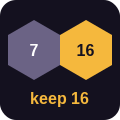
When you have advantage on a roll, you roll two d20s instead of one and use the higher result. When you have disadvantage, you roll two d20s and use the lower roll. Your usual ability modifier and bonuses only get added once you've picked the die that counts. Think of it as two rolls, one result: the highest roll for advantage, the lower roll for disadvantage.
That's the whole mechanic, straight from the basic rules. Advantage and disadvantage apply to the three core d20 rolls:
- an attack roll, when you swing a sword or cast a spell that attacks;
- an ability check, when you try to climb, sneak or persuade;
- a saving throw, when you resist a spell, trap or poison.
It does not apply to damage dice. You still roll damage once. Advantage only changes which d20 you read.
An example at the table
For example, our ranger fires at an orc that is blinded. Attack rolls against a blinded target have advantage, so the ranger's player rolls two d20s: a 6 and a 15. She keeps the 15, adds her +7 attack bonus, and gets 22. That beats the orc's AC of 13 easily. With one die, the 6 would have been a 13, a bare hit. With disadvantage, she would have kept the 6.
Advantage vs disadvantage at a glance
| Advantage | Disadvantage | |
|---|---|---|
| Dice rolled | Two d20s | Two d20s |
| Which you keep | Higher | Lower |
| Average d20 result | 13.825 | 7.175 |
| Chance of a natural 20 | 9.75% | 0.25% |
| Chance of a natural 1 | 0.25% | 9.75% |
Why advantage and disadvantage don't stack
You either have advantage or you don't. Two favorable situations grant advantage exactly as much as one does. In plain terms: if multiple circumstances impose disadvantage, you still roll just one extra d20. If two favorable situations both apply, only one grants advantage in practice, because only one grants advantage at a time. And when multiple circumstances impose disadvantage alongside a source of advantage, they all cancel. You never roll more dice than two.
So if the target is prone, blinded, and restrained, and you're hidden, you still roll two d20s. No third die, no fourth. Multiple sources of advantage don't add up.
When advantage and disadvantage cancel
If you have at least one source of advantage and at least one of disadvantage, they cancel out. You roll a single d20, with neither advantage nor disadvantage. Many tables shorthand this as disadvantage advantage cancel, and it's the same idea.
This is true even when the numbers are lopsided. Three sources of advantage and one of disadvantage still give you a plain roll, with neither advantage nor disadvantage. In such a situation, you don't count sources. When multiple situations affect a roll in opposite directions, the result is a straight roll. In such a situation, the DM can rule fast and move on, since multiple situations affect the roll the same way every time.
Players hate this the first time. Picture a wizard who had advantage from faerie fire, from the target being restrained, and from a familiar's help action, and then a goblin stepped next to her while she fired a ranged spell. One hostile creature within 5 feet imposed disadvantage, and the whole stack of advantage was gone. That's the rule, and it keeps the game fast.
Why the game was designed this way
The rule makes sense once you see the alternative, and the basic rules explain it well. Earlier editions tracked dozens of small bonuses and penalties: +2 for flanking, -4 for cover, +1 from a spell. Players had to determine modifiers and apply penalties every turn. Advantage and disadvantage replace most of that with one simple question: is something helping you or hurting you? It speeds up combat a lot, and it encourages teamwork, because one player's spell can set up another player's attack.
How do I calculate advantage in D&D?
To calculate your chance of success with advantage, figure out your normal chance of success, then work out the chance that both dice fail.
Chance with advantage = 1 minus (chance of failure) squared
Chance with disadvantage = (chance of success) squared
If you need an 11 or higher on the die, your normal chance is 50%. The chance both dice miss is 0.5 x 0.5 = 25%, so advantage gives you 75%. Disadvantage gives you 0.5 x 0.5 = 25%.
Advantage odds table
| Need on the d20 | Normal roll | With advantage | With disadvantage | Advantage worth about |
|---|---|---|---|---|
| 2 or higher | 95% | 99.75% | 90.25% | +1 |
| 5 or higher | 80% | 96% | 64% | +3.2 |
| 8 or higher | 65% | 87.75% | 42.25% | +4.55 |
| 10 or higher | 55% | 79.75% | 30.25% | +4.95 |
| 11 or higher | 50% | 75% | 25% | +5 |
| 12 or higher | 45% | 69.75% | 20.25% | +4.95 |
| 14 or higher | 35% | 57.75% | 12.25% | +4.55 |
| 15 or higher | 30% | 51% | 9% | +4.2 |
| 16 or higher | 25% | 43.75% | 6.25% | +3.75 |
| 18 or higher | 15% | 27.75% | 2.25% | +2.55 |
| 20 only | 5% | 9.75% | 0.25% | +0.95 |
The last column turns the change in odds from two rolls into an equal flat bonus, which shows how advantage or disadvantage compares to a modifier. Advantage is worth about +5 when you need an 11, but closer to +1 when you need a 2 or a 20. The common rule of thumb that advantage is "about +4 or +5" holds only in the middle of the die. You can try any target number on our dice probability calculator.

Crits and natural 1s
Advantage nearly doubles your chance at a critical hit. With one die, a natural 20 shows up 5% of the time. With two dice, it's 1 minus (19/20) squared, which is 9.75%. On an attack roll, that's almost twice as many crits. When a crit lands, you roll damage dice twice, which is why paladins and rogues love advantage so much.
Natural 1s drop from 5% to 0.25%, since both dice have to show a 1. With disadvantage the numbers flip: natural 20s fall to 0.25% and natural 1s climb to 9.75%.
Common sources of advantage in combat
Advantage can come from conditions, actions, spells, and special abilities. Monster abilities, class abilities and racial abilities all use the same rule. Here are the ones that show up at almost every table. In each example below, the source either grants advantage to someone or imposes disadvantage on someone, and it helps to know which creature gets which.
Conditions on the target
- Prone target: melee attacks against a prone creature within 5 feet have advantage. Ranged attacks against it have disadvantage.
- Unconscious target: attacks have advantage, and any hit from within 5 feet is a critical hit.
- Blinded target: attacks against it have advantage, and its own attacks have disadvantage.
- Restrained: attacks against the creature have advantage, its attacks have disadvantage, and it has disadvantage on Dexterity saving throws.
- Paralyzed and stunned: attacks against the creature have advantage. A paralyzed creature also auto-fails Strength and Dexterity saving throws.
Actions that grant advantage
- Help action: this action grants advantage to an ally on their next ability check, or on the next attack roll against a creature within 5 feet of you, before your next turn.
- Hide action: if you hide and attack while unseen, your attack roll has advantage.
- Shoving prone: use an attack roll's slot to shove instead of making an unarmed strike for damage. Once the enemy is prone, your allies get advantage on melee attacks against it.
- Steady Aim: a rogue character can use a bonus action to gain advantage on the next attack roll that turn, if they haven't moved.
Spells that grant advantage
Many spells give advantage and many creature abilities do too, either to you or to everyone attacking a target. Read what each spell tells you, because the spell tells you exactly who gets the benefit.
- Faerie fire: the spell tells you who glows: creatures that fail a Dexterity save glow, and attack rolls against them have advantage.
- Guiding bolt: the spell tells you that on a hit, the next attack roll against the target before the end of your next turn has advantage.
- Holy aura: allies in the aura have advantage on all saving throws, and other creatures attack them with disadvantage.
- Otto's irresistible dance: the target dances, has disadvantage on attacks and Dexterity saving throws, and other creatures have advantage on attacks against it.
- Enhance ability: advantage on ability checks of one ability.
Class abilities and special abilities
- Reckless Attack: a special ability that gives a barbarian advantage on Strength melee attacks for the turn, but attacks against them also have advantage until their next turn.
- Pack Tactics: a special ability that lets wolves and kobolds gain advantage on attacks when an ally is next to the target creature.
- Magic Resistance: a creature with this special ability has advantage on saving throws against spells and other magical effects.
- Danger Sense: a barbarian has advantage on Dexterity saving throws against effects they can see.
Monster stat blocks are full of these. Each special ability names the exact rolls it affects, so read it carefully. A special ability might affect every attack roll, or only a particular attack, such as a bite but not a claw. Special effects like these are the main way monsters gain advantage without help from other creatures.
Common sources of disadvantage
Disadvantage mostly comes from bad positioning, bad circumstances and enemy spells. Advantage or disadvantage from a condition lasts as long as the condition does. These are the ones to watch for.
Ranged attacks
Ranged attacks have two common sources of disadvantage, and each one imposes disadvantage regardless of how good the archer is:
- Attacking beyond a weapon's normal range. A longbow's normal range is 150 feet; out to 600 feet, you can still shoot, but with disadvantage. Past the attack's range limit, you can't attack at all.
- Attacking while a hostile creature is within 5 feet of you, can see you, and isn't incapacitated. This is the one that wrecks archers and spellcasters in close combat.
Ranged attacks against a prone target also have disadvantage.
Conditions on you
- Poisoned: this condition imposes disadvantage on attack rolls and ability checks.
- Frightened: as long as the thing it fears stays visible, a frightened creature rolls every attack roll and ability check at disadvantage.
- Blinded: disadvantage on your attack rolls.
- Prone: disadvantage on your attack rolls.
- Exhaustion: at level 1, disadvantage on ability checks; at level 3, on attack rolls and saving throws too.
Actions that impose disadvantage
The Dodge action imposes disadvantage on every attack roll against you, as long as you can see the attacker. It also gives you advantage on Dexterity saving throws. Spending your turn to dodge sounds passive, but against one big enemy it can save the fight.
Being invisible also imposes disadvantage on attack rolls against you, and grants advantage on your own attacks. It's one of the few things that hits both sides of the coin.
Advantage on ability checks and saving throws
Advantage or disadvantage isn't only for combat. It applies to any ability check or saving throw where something helps you.
Ability checks
The DM can grant advantage when circumstances clearly help a character: climbing a rope with a friend holding it steady, picking a lock with the perfect tools, or persuading a guard who already likes you. It's at the DM's discretion, and good DMs hand it out for clever play. That's the design goal: advantage and disadvantage reward ideas and punish bad circumstances, not just numbers on a character sheet.
Saving throws
Many racial abilities and class abilities grant advantage on specific saving throws:
- Dwarves on saves against poison.
- Elves on saves against being charmed.
- Halflings on saves against being frightened.
- Gnomes on Intelligence, Wisdom and Charisma saves against magic.
Advantage on death saving throws is rare, but a few features and items grant it. For how those rolls work, see our death saves guide.
What gives you advantage on initiative in 5e?
Initiative is a Dexterity check, so anything that gives advantage on Dexterity checks applies. Common sources:
- The barbarian's Feral Instinct at level 7.
- A sentinel shield or weapon of warning.
- The enhance ability spell, choosing cat's grace.
- Inspiration, if you spend it on the roll under 2014 rules.
The 2024 rules add more, including a reworked Alert feat. Our initiative guide has the full list and the odds of going first.
Is advantage or proficiency better?
They do different things, and the best answer is "both, because they stack."
Proficiency is a flat bonus from +2 to +6 that always applies. Advantage is worth up to about 5 points, but only on rolls where you need around 8 to 14 on the die. On an easy roll or a nearly impossible one, advantage barely moves the needle.
At low levels, advantage is often the bigger boost: a +2 proficiency bonus is less than the roughly +4 to +5 that advantage gives on a coin-flip roll. At high levels, a +6 proficiency bonus wins on average. But you never have to choose. Proficiency adds to the roll, and advantage chooses which die you keep. A rogue with expertise and advantage on a Stealth check is about as close to a sure thing as 5e gets.
Inspiration, Lucky, and other rerolls
A few features act like advantage but aren't quite the same.
Inspiration
Under the 2014 rules, the DM awards inspiration for good roleplaying. You can spend it to gain advantage on one attack roll, saving throw, or ability check. The 2024 rules rename it Heroic Inspiration and change it to a reroll of any die you just rolled. See our inspiration guide for how tables use it.
The Lucky trait and feat
Halflings have the Lucky trait: when you roll a 1 on the d20, you can reroll that die and must use the new result. With advantage, you reroll only the die that showed the 1.
The 2014 Lucky feat lets you roll an extra d20 three times per long rest and pick which result to use. Used on disadvantage, it lets you pick any of three dice, which can break a bad position.
Worked examples at the table
Rules stick better with a story, so here are four fights from recent sessions. Each example shows how advantage and disadvantage interact with real circumstances, spells and creature abilities.
Example 1: the shove and stab
Our fighter uses her first attack to shove an ogre prone. The ogre is now a prone target, so her second attack roll has advantage, and so do melee attacks from the rogue standing next to it. The rogue needs a 12 on the die to hit; one d20 gives 45%, two dice give 69.75%. The ranger shooting from 60 feet, though, now attacks with disadvantage, because ranged attacks against a prone creature are harder. One shove, three different rolls.
Example 2: the archer in a corner
Our ranger has advantage from faerie fire on a cultist. A second cultist then steps up next to her, and a hostile creature within 5 feet imposes disadvantage on her ranged attacks. Advantage and disadvantage cancel, so she rolls one die, with neither advantage nor disadvantage. Her better move is to step away first, then attack. Ranged attacks from a safe square keep the advantage.
Example 3: the frightened paladin
A dragon's presence leaves our paladin frightened. Fear hurts the paladin's attack roll only while the feared creature stays in view, but the paladin is attacking the dragon's cultist minion, which is also restrained by a web. Restrained grants advantage on attacks against it. One source of each: a straight roll. A handy line to say at the table is "disadvantage, advantage, cancel, one die." Players remember that.
Example 4: the stacked deck
Our warlock hides, a friend uses the help action, and the target is blinded. Three favorable situations grant advantage here, but in practice the attack still gets just one extra die. Multiple circumstances like these still give only one extra die, so the attempt is a plain advantage roll.
Optional rules and house rules
The Dungeon Master's Guide includes an optional rule for flanking: two allies on opposite sides of an enemy both get advantage on melee attacks. It hands out advantage so often that other abilities and spells lose value, so many tables switch to a +2 bonus.
Some tables stack multiple things into a three-dice "super advantage." It isn't in the rules, so skip it.
Quick FAQ
Does advantage apply to damage?
No. Advantage only affects d20 rolls: attack rolls, ability checks and saving throws. Damage dice are rolled normally. On a crit, you roll damage dice twice, but that's from the crit, not from advantage.
Can I gain advantage after I roll?
No. You need to know you have advantage before you roll. Advantage that shows up after the dice land doesn't change the roll you already made.
What about other effects that change dice?
Bless, guidance and bardic inspiration add dice to the total, and they work with advantage or disadvantage alike. Those stack with advantage, since they add to the result after you've picked a die. Advantage picks the die; the other effects add to it. Our FAQ has more on how dice combine.
Where do I roll for advantage online?
Our d20 roller rolls two dice at once and highlights the higher and lower roll, so you can play advantage or disadvantage with one click.